When should a business move to the cloud?
The cloud is not automatically better. It is better when access, reliability and recovery matter more than the server in the back office.
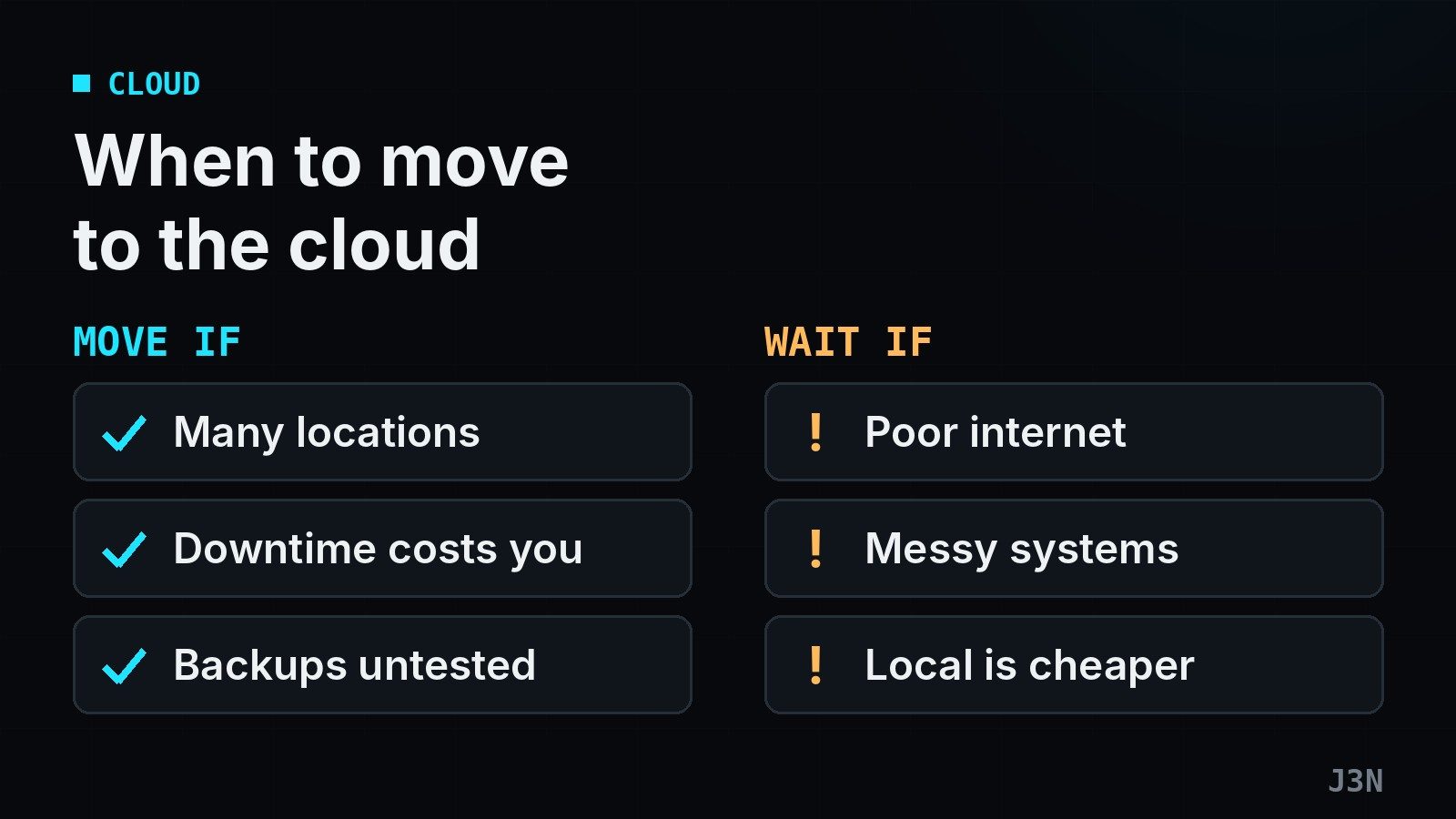
"Move to the cloud" is often presented as an obvious upgrade. It is not always. The right question is not whether the cloud is modern, but whether it solves a problem the business actually has.
Good reasons to move
- People need access from more than one place. Branches, sites, remote staff or managers who travel.
- Downtime is expensive. If the office server fails, work stops. Cloud hosting spreads that risk.
- Backups are uncertain. If nobody can say when the last backup was tested, the data is at risk.
- Growth is expected. More users, more data or new systems are easier to add to infrastructure built for it.
- Security is left to chance. Managed infrastructure makes updates, access control and encryption routine.
Reasons to be careful
Unreliable internet at a site can make a cloud-only system frustrating. Some workloads are cheaper to run locally. And moving a badly organised system to the cloud simply gives you a badly organised system that costs money every month.
A practical path
Start with what is critical: the data. Automated, off-site, tested backups are worth having whatever else you decide. Then move the systems that benefit most from remote access and reliability, with a clear plan for how people will work if the connection drops.
The cloud is infrastructure, not a strategy. It is worth it when it makes the business more available, more recoverable and easier to grow.
From our work: every system we host keeps an automatic copy of its database on the server, and reminds the owner each month to download one and keep it somewhere else.