Building software around real business workflows
Software that ignores how people actually work gets worked around. Good systems start on the floor, not in a feature list.
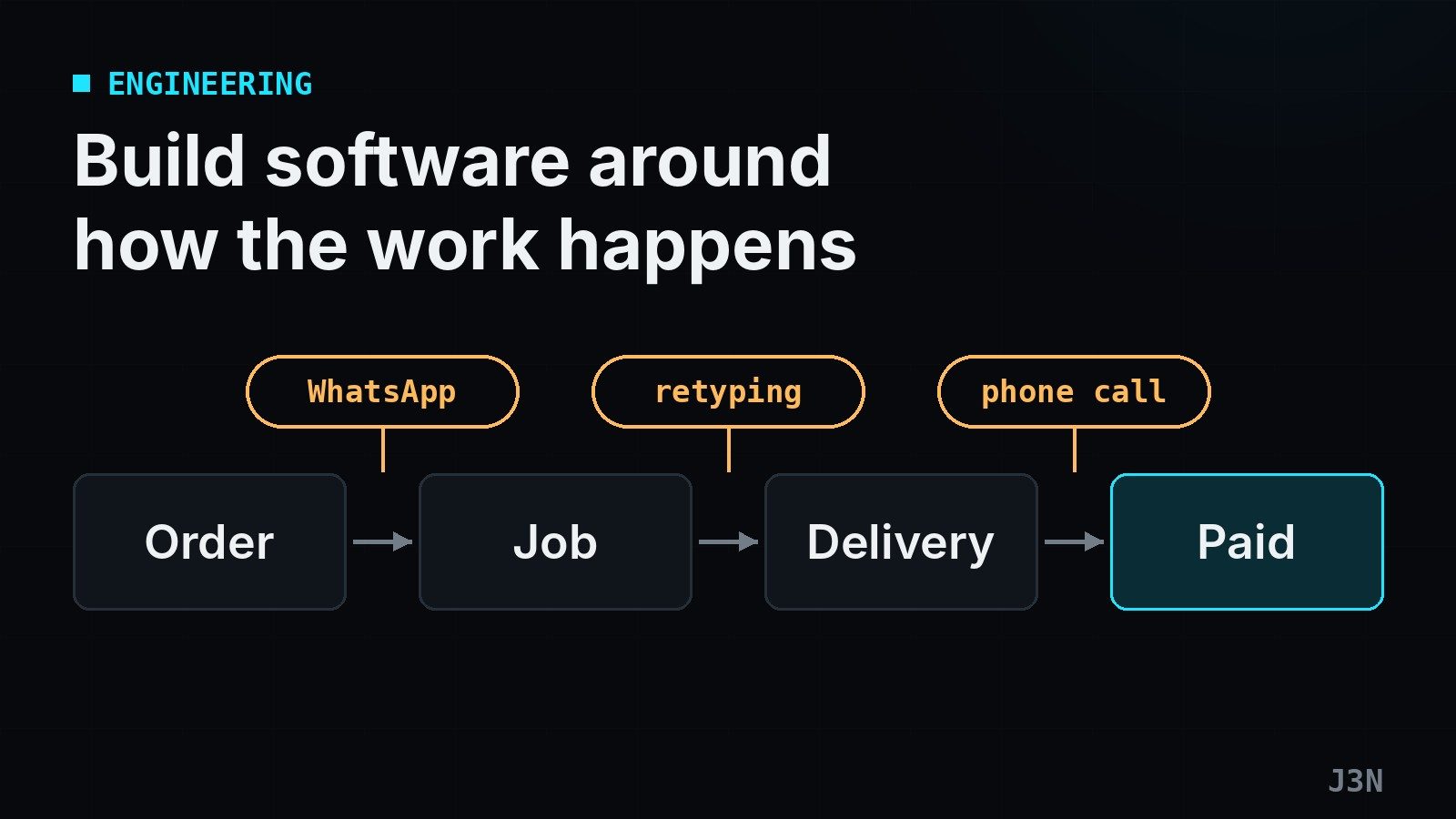
Most failed software projects do not fail because the code was bad. They fail because the software was built for how someone imagined the business worked, not how it actually does.
Start where the work happens
Before designing screens, watch the work. Follow a real order from the moment it arrives to the moment it is delivered and paid. Note every hand-off, every piece of paper, every message and every workaround. Those workarounds are the most valuable information you will find: each one points to a need the current tools do not meet.
Design for the people using it
A manager reviewing a dashboard and a supervisor updating a job on the workshop floor need very different screens. Good business software gives each role what it needs, with as few steps as possible, on the device they actually use.
Make the right thing the easy thing
- Fill in what the system already knows instead of asking again.
- Prevent invalid actions rather than reporting them later.
- Keep a history of changes so problems can be traced, not argued about.
Ship, then improve
No workflow study captures everything. Releasing the most important module first, watching it in use and improving it quickly produces better software than trying to specify everything up front. The goal is not a finished product on day one. It is a system that fits the business better every month.
From our work: on one equipment-hire project, the most important rule came from watching the work, not from a meeting: a machine must never be confirmed for two jobs on the same days.